
On Matriarchal Societies
a Mother's Day reflection on what humans and elephants have in common

Video credit: Catherine Sheffler, March 2026
Mothers - Elephants and Human
I had the joy of witnessing elephants play at the San Diego Safari Park. I still call it the Wild Animal Park, as that was the name when I frequented it with my little children.
In the newly opened Elephant Valley, a baby copied its mother, first snorting some mud with its trunk and splashing it on its back, then rolling in the shallow pool. It was a hot day, but not scorching, and still, the layer of mud must have felt good, another layer against pesky mosquitoes. There was a freshwater pool nearby, but the mud seemed more fun.
I read about the elephants’ names, habits, and alliances in the Zoonoz (I also use the old name, as San Diego Zoo Wildlife Alliance Journal is a mouthful). I learned elephant society was a hierarchical matriarchy, with the dominant female commanding the herd, supported by secondary females. Their children likewise model the structure, with the child of the dominant female getting more attention and privilege than the others. Even elephants have favorite cousins and playmates!
Each elephant plays a role in their society - the babysitter, the playful one, the naughtiest one, the cranky one, the favorite aunt, etc. Yet, despite their differences, they always come together as a group to protect the young and fend off predators.
I went home thinking about the women in my family. On both paternal and maternal sides, my female ancestors are strong women. Not to say my male forebears aren’t, but they had shorter lifespans. My great-grandmother, Inang Baket, lived to almost a hundred years old, over thirty years after her husband died. My paternal grandmother, Mama Ching, was widowed twice - once at age thirty and again when she was sixty. My maternal grandmother, Lola Andang, waited only two years to follow her husband in the afterlife, but he had been absent in a way for many years. In his last decades, he suffered from what we called in the Philippines “a second childhood” because we did not yet have a name for Alzheimer’s. My mother and aunts on both sides also outlived their husbands.
My two grandmothers lost infants due to the high rates of childhood mortality, and each had nine surviving children. Apart from that, they were opposites.
Concesa Rosario Ragasa Rabe
Mama Ching was a people person, a politician, and an animated storyteller. She was married twice, once to my grandfather Claudio Ragasa, who was assassinated in 1951. Her next marriage was to her late husband’s Vice Mayor, Adriano Rabe, who was twenty-two years her senior. Lolo Anong, as we called him, was born soon after the Spanish-American War in 1898.
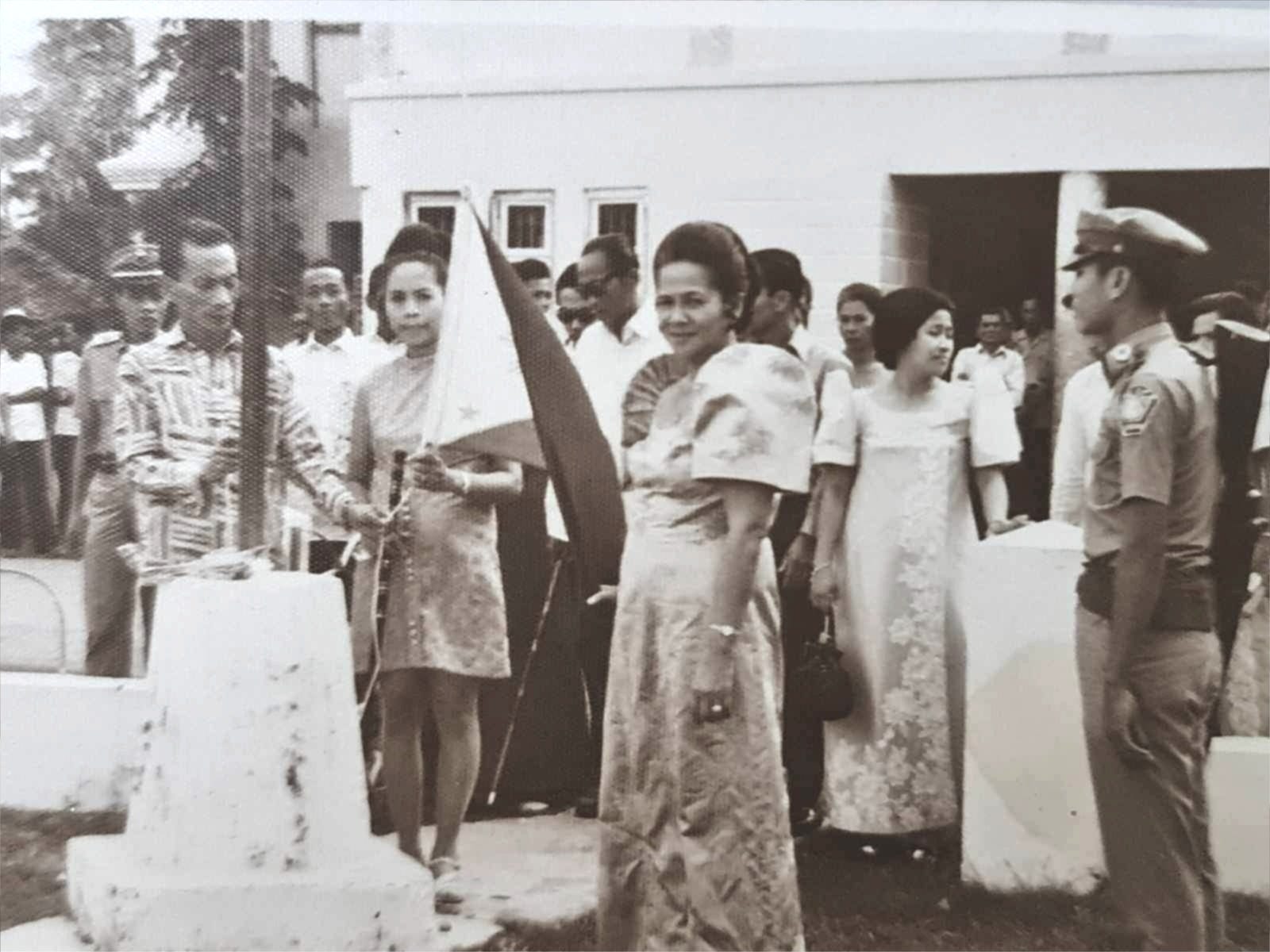
Mama Ching managed her two households like a true politician, always serving as the ambassador of goodwill. “Simpaen tayo,” she often said. “Let’s fix this among ourselves.”
On one hand, Mama Ching constantly fought her late husband’s family, who took her children away from her, intent on protecting their interests. One by one, she reclaimed them. One of my aunts' first memories of her mother was on the day that she “kidnapped” her back into her fold. On the other side of town, she was a new stepmother to four grown daughters who refused to let her handle the household’s purse strings.
Not much fazed Mama Ching. After all, she had survived the flu pandemic of the 1920s, the death of her younger brothers, World War II, and the assassination of her first husband. She managed a tobacco business with Ilocos Sur Governor Carmeling Crisologo, whose husband was also assassinated at the Vigan Cathedral in 1970. Soon after, the tobacco business declined.
Mama Ching immigrated to America with a fifth-grade command of English and had to reinvent herself. She cooked orders of pansit, lumpia, and other Filipino dishes from her tiny kitchen in Carson, California. In 1993, my father, her eldest son, died and dealt her a devastating blow. I still can picture her at his gravesite on a brutal summer day, “How can you go before me?”
When it was her turn to leave this earth, it seemed like the whole Filipino community of Southern California, Hawaii, Nevada, and representatives from the Philippines came to mourn her. My husband said it best, “She is like the sun, and we are the moon and the planets who orbited.”
That struck a chord in me, as Mama Ching’s favorite saying was, “Behind the clouds, the sun is still shining.”
Today, all her grandchildren have their own families, and it gets harder to get together during the holidays. Yet the bond she formed in us is stronger than Gorilla glue.
Alejandra Benítez Vergara y Basco
Lola Andang, on the other hand, was a teacher and ruled her home like it was a classroom. Everyone was academically gifted, and she often mused that she felt more like a debate team captain than a mother. She claimed her family was the first in San Esteban to send all children to college. Never mind that they sold plots of land and were left with a small parcel sufficient only to sustain their household needs.
When her children graduated, they presented her with their diplomas in recognition of her sacrifices. She framed them and mounted them on the living room posts, sturdy, dark-wood logs hewn from narra trees. Lola kept the glass clean in the perpetual dust of Ilocos. Although Lola’s back was stooped from scoliosis, I noticed how she stood straighter whenever she lingered over their names and those of the distinguished universities. The glass reflected her face, and I detected a wistful smile.
I learned my cursive by tracing my little fingers on the inked calligraphy. It was then that I first learned that the Philippines was a matrilineal society. My mother’s diploma displayed her name, “Imelda Vergara y Benitez.”
Translating to “and,” the Spanish y asserts that the mother’s maiden name, in this case Benitez, is essential to the person’s identity. Lola told me that Benitez also meant ‘blessed.”
In my college diploma, “y Vergara” trails my full name, also indicating my maternal lineage.
To this day, Filipinos keep their mother’s maiden names. These are a few reasons:
In a society where men sometimes had other families, children born outside the marriage cannot register baptismal records in their fathers’ names.
Only a mother knows who the father of her children is.
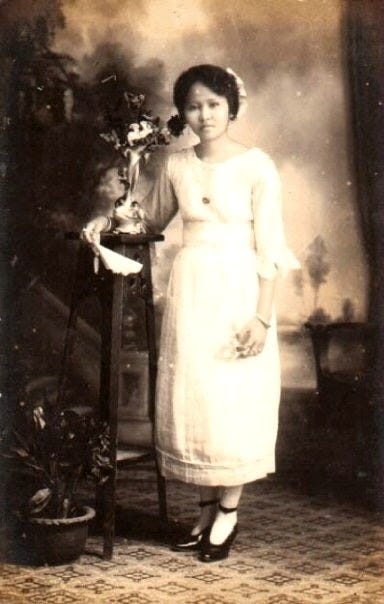
Like my other grandmother, Lola Andang was no stranger to difficulty. She grew up in the post-Spanish-American War era under the tutelage of Thomasites. Her town suffered from famine in the years of little rain. Her third child, Constantino, died in early childhood, and she spent days after in the cemetery, weeping on his tiny grave. It was her mother, Tomasa Basco Benitez, who made her snap back to life. “You lost one child. Two others are waiting at home.”
Lola was fiercely loyal to her family. Whenever my siblings and I quarreled, she admonished us, “Love your brothers and sisters because they are all you have. Your parents will die. Your spouses may leave you, but you will always have your siblings.”
We have passed Lola’s words to our children, especially her favorite saying, “One word is enough for the wise.”
How did the matriarchal society change?
I have a few memories of my grandfathers, Lolo Abdon and Lolo Anong, while my grandmothers wielded great influence in my life. My children, nieces, and nephews share the same experience as their grandmothers.
Filipino women’s leadership predates the creation of the Philippines, named after King Philip of Spain. After colonization, women were expected to be like Maria Clara - gentle, chaste, subservient, pious, and in dire need of a knight in shining armor, as portrayed in Jose Rizal’s Noli me Tangere.
Before colonization, the social structure was vastly different:
The underlying power and strength of Pinays is rooted in pre-colonial indigenous Philippine society where equal importance was given to women and men. Women were traditionally entitled to property, to engage in trade, and, in the absence of a male heir, hold the position of village chieftain. Women were also powerful and esteemed high priestesses and healers known as babaylans or catalonans. Such was the power of women in pre-colonial Philippine society that they also had the right to divorce their husbands if they chose to do so.
It is no wonder that women’s resistance groups evoke the spirit of Gabriela Silang, who led the revolution after the Spanish executed her husband, Diego, in 1763. GABRIELA (General Assembly Binding Women for Reforms, Integrity, Equality, Leadership, and Action) is an active coalition to this day.
As early as 1907, soon after the United States purchased the Philippines from Spain for $20,000,000, Filipino women were fighting for their rights. They exceeded the required number in a plebiscite and secured suffrage for themselves.
Yet, to this day, the Philippines is the only country besides the Vatican that bans divorce.
In many ways, colonization turned back the clock on women’s rights, and we are still catching up.
Good Matriarchy is a natural thing
Like with elephant society, the family’s dynamic changes when the matriarch passes on. Out of Lola’s nine children, Mama is the last one standing. She once was the Daddy’s girl and favorite, much to her older sister’s consternation, who called her “Señorita.”
Although she has mellowed with age, she is still a force of nature, and we still tremble at the sight of her widened eyes and arching eyebrows.
Like humans, elephants are intelligent and socially complex:
Successful matriarchs are not self-appointed leaders of their family; they are leaders because members of their family respect them, and they are respected because they have proven over the years that they can be trusted to make wise decisions in a time of crisis. Through the years older females become “repositories” of social and ecological knowledge.

Perhaps the strong leadership of women must be taken as it is, without denigration of the male counterparts. I come from generations of fearless women, and I hope to pass this strength to my daughter and nieces.
Happy Mother’s Day to all the women in my life!
Reading Recommendations:
Tobacco Farming in the Philippines: History, Regions, Challenges, and the Future
The Philippine tobacco industry: “the strongest tobacco lobby in Asia.”
A Brief History of The Thomasites
Manuel L. Quezon and the Filipino women’s suffrage movement of 1937
DID YOU KNOW? Pre-Colonial Philippines’ Longstanding Tradition of Women Leadership and Mysticism
Such a beautiful piece Ayel! Indeed, we belong to a matriarchal family! Kudos to all strong women in the world!
I thoroughly enjoyed this piece.