
31 Days in Ink
Mapping my Food Memories in Inktober

I first read about Inktober in Kelcey Ervick’s Substack, The Habit of Art. She also curates Letters to Dead Authors and Artists, which published my letter to Edgar Allan Poe.
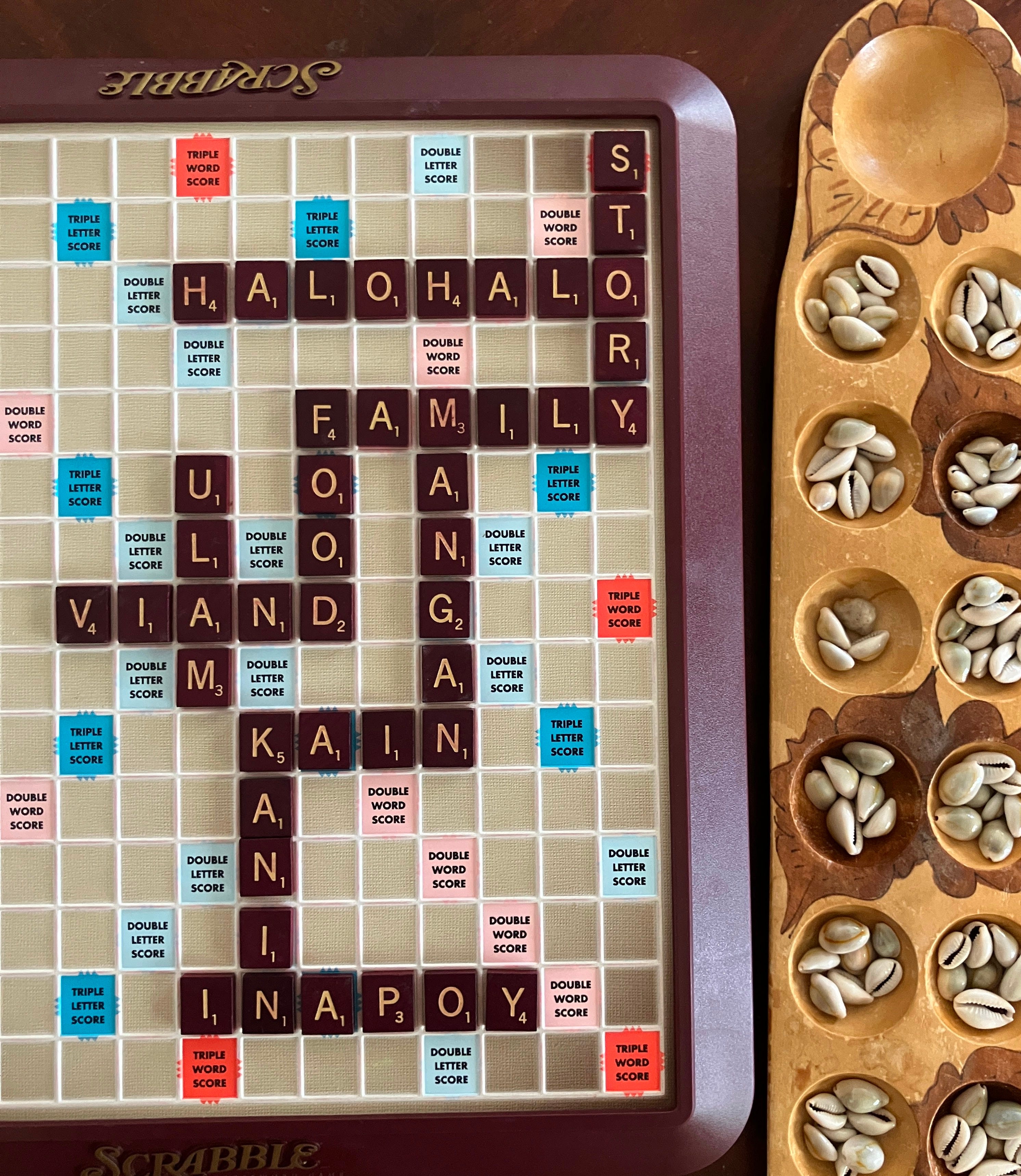
Although I did not follow Inktober’s prompts, the concept of drawing in ink every day in October fascinated me. The idea was ripe, for I had just read Family Style by Thien Pham. I loved how he used food as milestones in his immigrant journey.
October was also Filipino American History Month, so it was only natural to think about food.

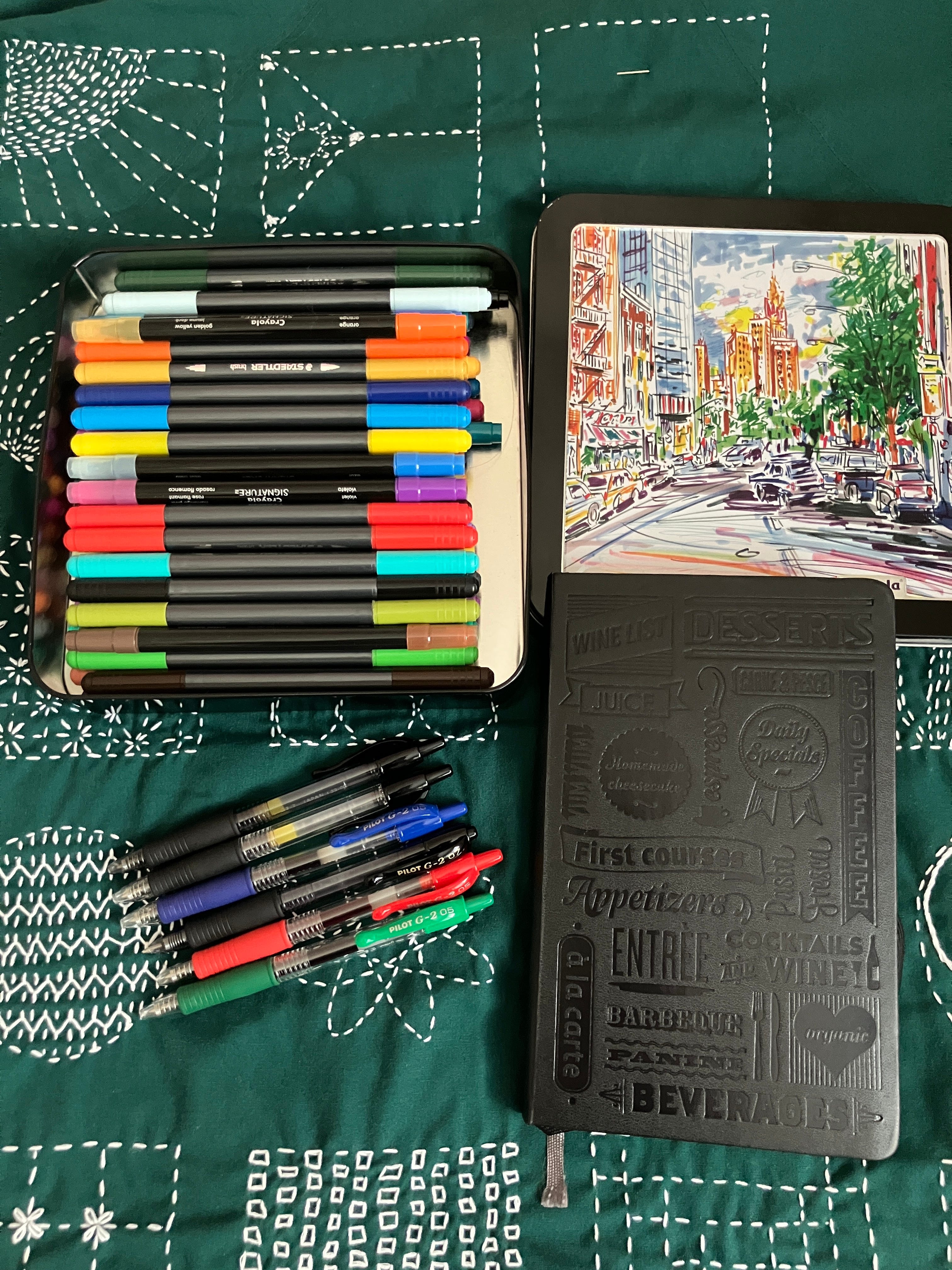
Materials:
The most liberating materials to work with are the inexpensive ones. They eliminate the fear of messing up. For Inktober, I used:
Moleskine restaurant journal - treasure find at thrift shop for $1.99
Set of Crayola watercolor brushes - also found at the thrift shop for $4.99
Pilot G-2 05 and 07 ballpoint pens - my ordinary favorite pens
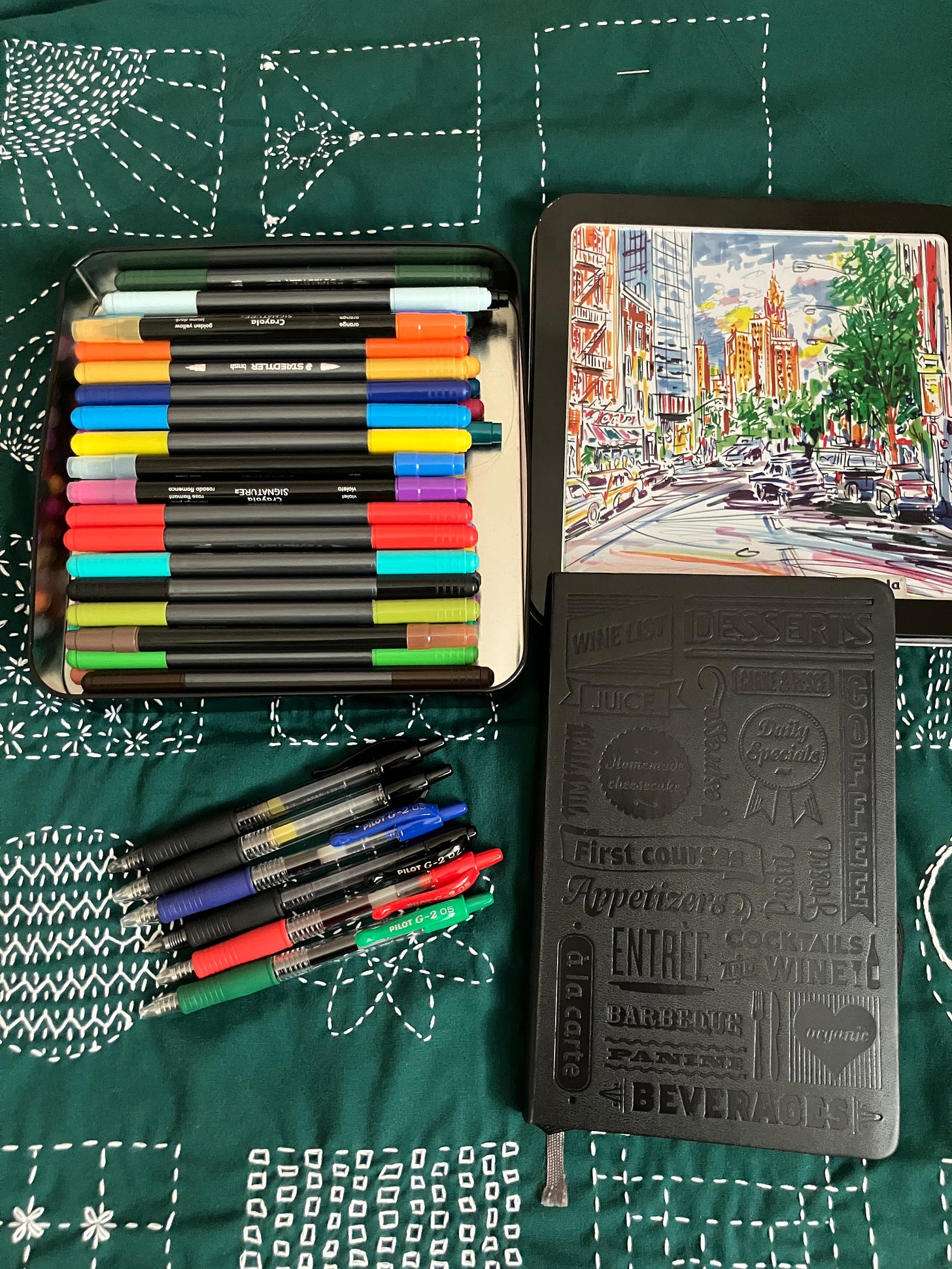
I switched between stitching sashiko and drawing in ink this October.
Process:
It started with one word: VIAND.
Growing up, we used this word to mean the main dish. I never thought much about it until I arrived in the US in my early twenties and asked, “What’s our viand?” at a family event. Everyone laughed because they didn’t recognize that word. They coached me, “Here in America, we say, ‘What’s for dinner?’ ”
I looked up “viand” in the dictionary. Its root word was Old French “viande,” meaning “food, vegetable, animal, victuals, provisions.” It is also related to the Latin vivere, to live.
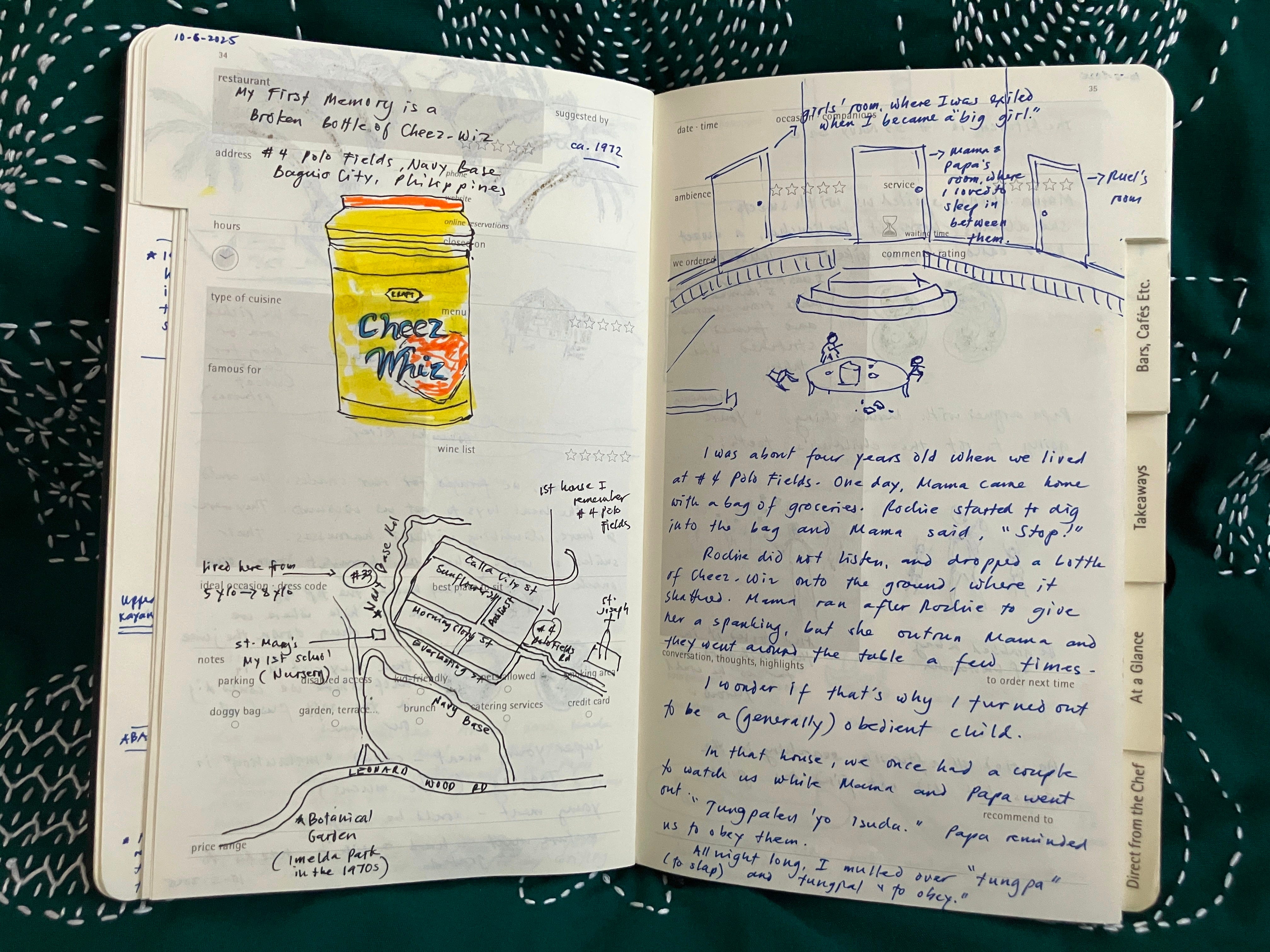
In Inktober, I mapped my memories by drawing the street or location associated with the food. The scents, taste, and associations were visceral, and it brought me back to those moments. Most of them were pleasant, but others were painful. Some evoked the magical realism of my daily childhood life, as well as the rites of passage that occurred during my teenage years and beyond.
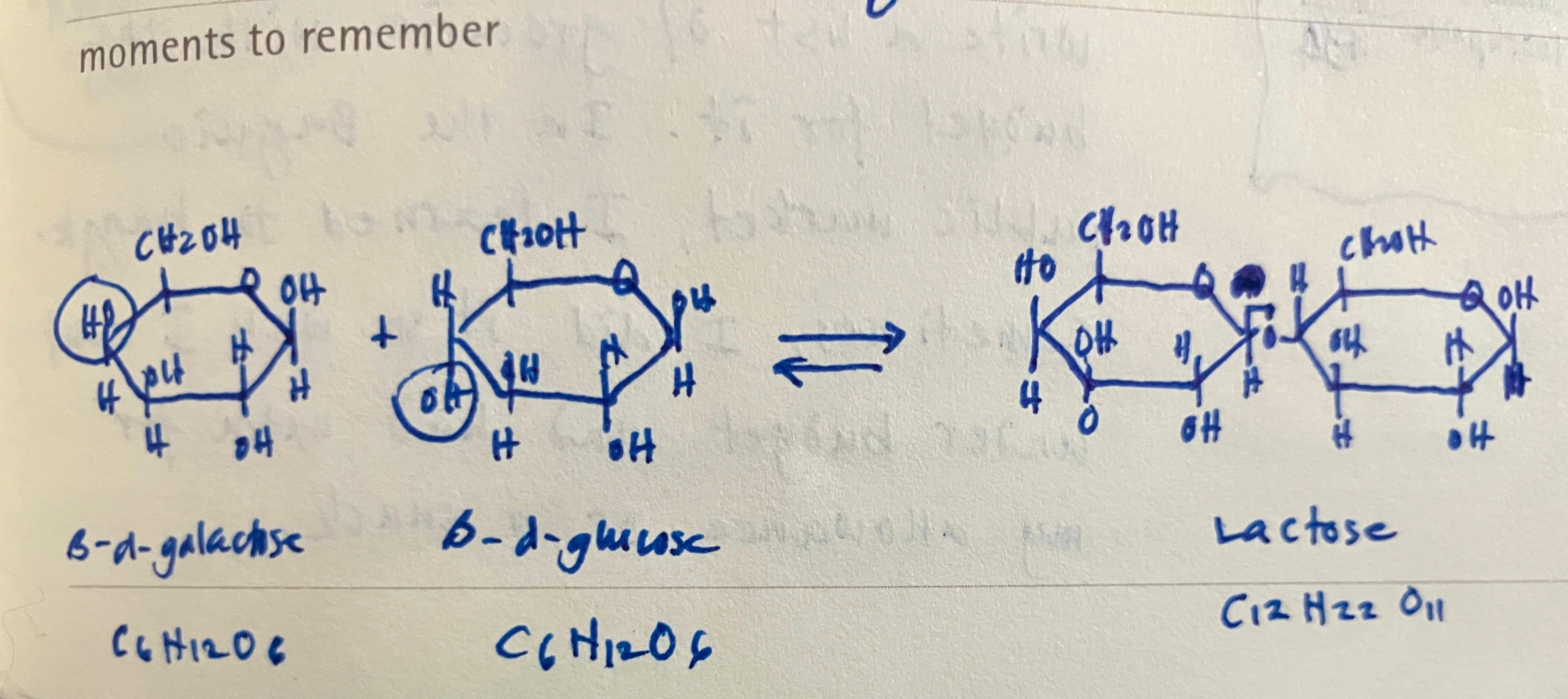
I do not consider myself a foodie who posts an endless array of pictures of drinks and entrees on Instagram. In fact, I’m a picky eater - nothing spicy, no dairy, no raw fish, no eggplant, no fatty food, no strong smells, and no surprises. Quite boring food-wise. Yet, I discovered in Inktober that I have an obsession with food! I crave its comfort, and am crushed when I can’t eat the dish I had been salivating over all day.
From my earliest recollection, at the age of four, to what I ate this morning, food has been the source of my life, my relationships, and my memories.
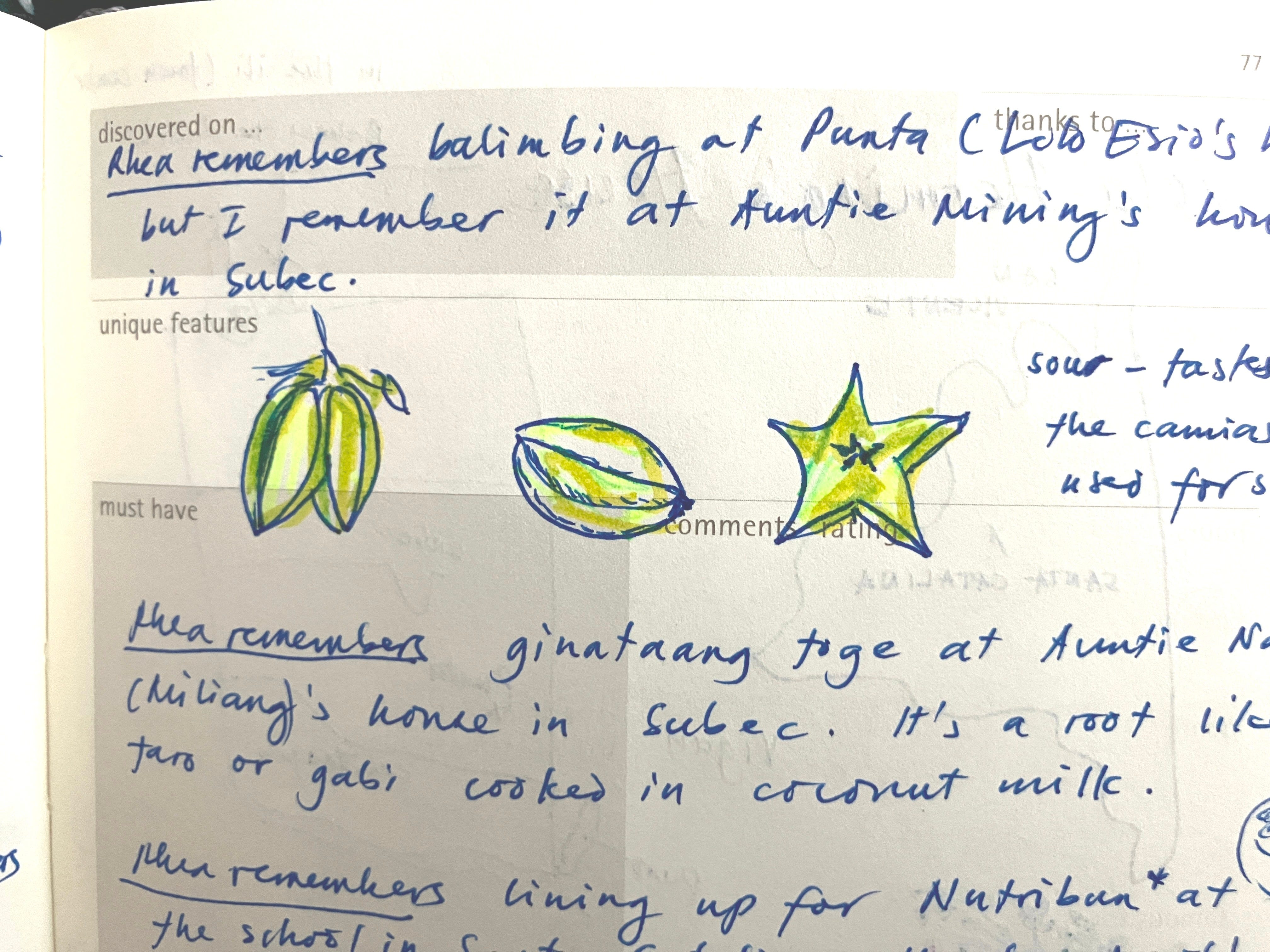
Food carries our stories, like a memoir, in the sense that people remember one event through the lens of their own experience. It is similar to the fruit balimbing, a sour, green fruit that is shaped like a star when cut crosswise. In Filipino, balimbing can be used to describe a person who presents multiple faces, similar to the Spanish doble-cara or a fair-weather friend in American English.
Yet, isn’t memory fickle that way?
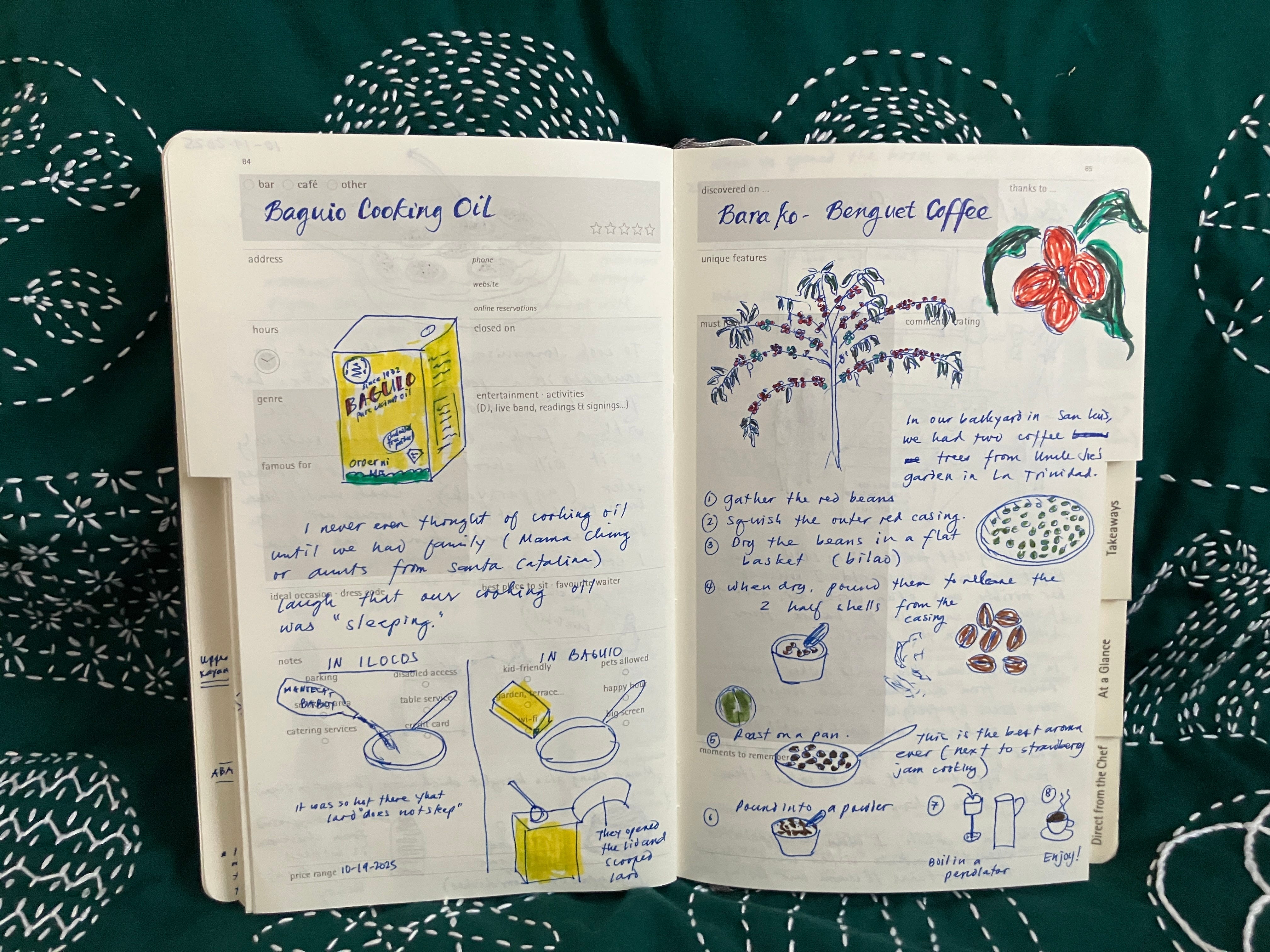
It must be true that the body retains at a cellular level what the conscious mind cannot. What surprised me about Inktober was the outpouring of images that kept me up past my bedtime. The photos and scents manifested right before me - guava leaves simmering in a vat of hot water to make a soothing bath for my itchy skin, the aroma of coffee beans roasting on the kitchen stove, or the melting of strawberry and sugar into a delightful jam.
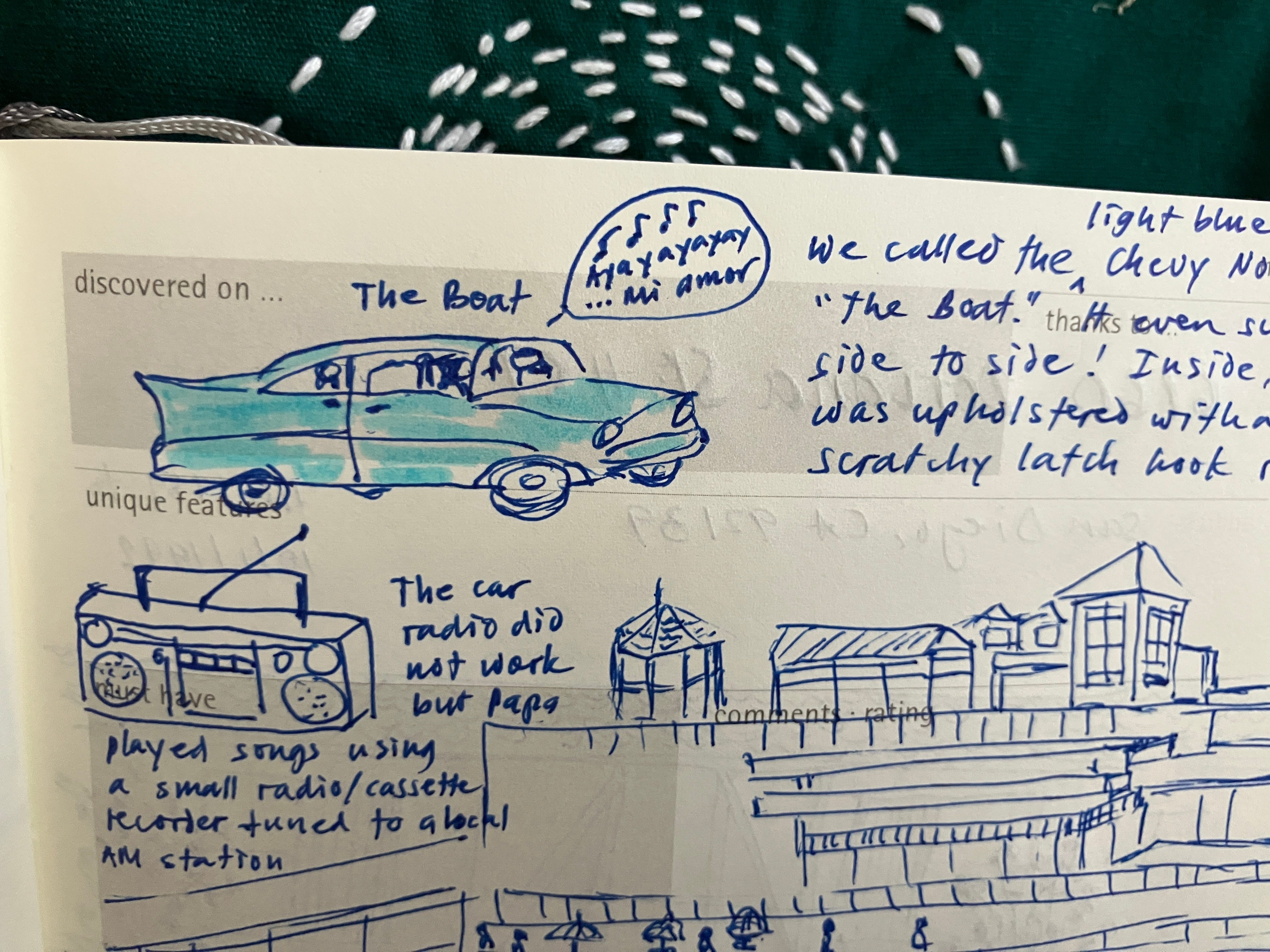
Food is a way to resurrect happy times, such as when my brother and I rode in Papa’s 1957 Chevy Nova to Redondo Beach. He ordered crab fresh off the tank, and we ate them with corn on the cob. He exuded such joy in eating. Every bite evoked the food we ate in Puro, the island paradise of our youth. Papa adored food like it was a goddess, and often praised it, “This is the best in the West!” I take after him, always planning my dessert before taking the first bite of my meal.
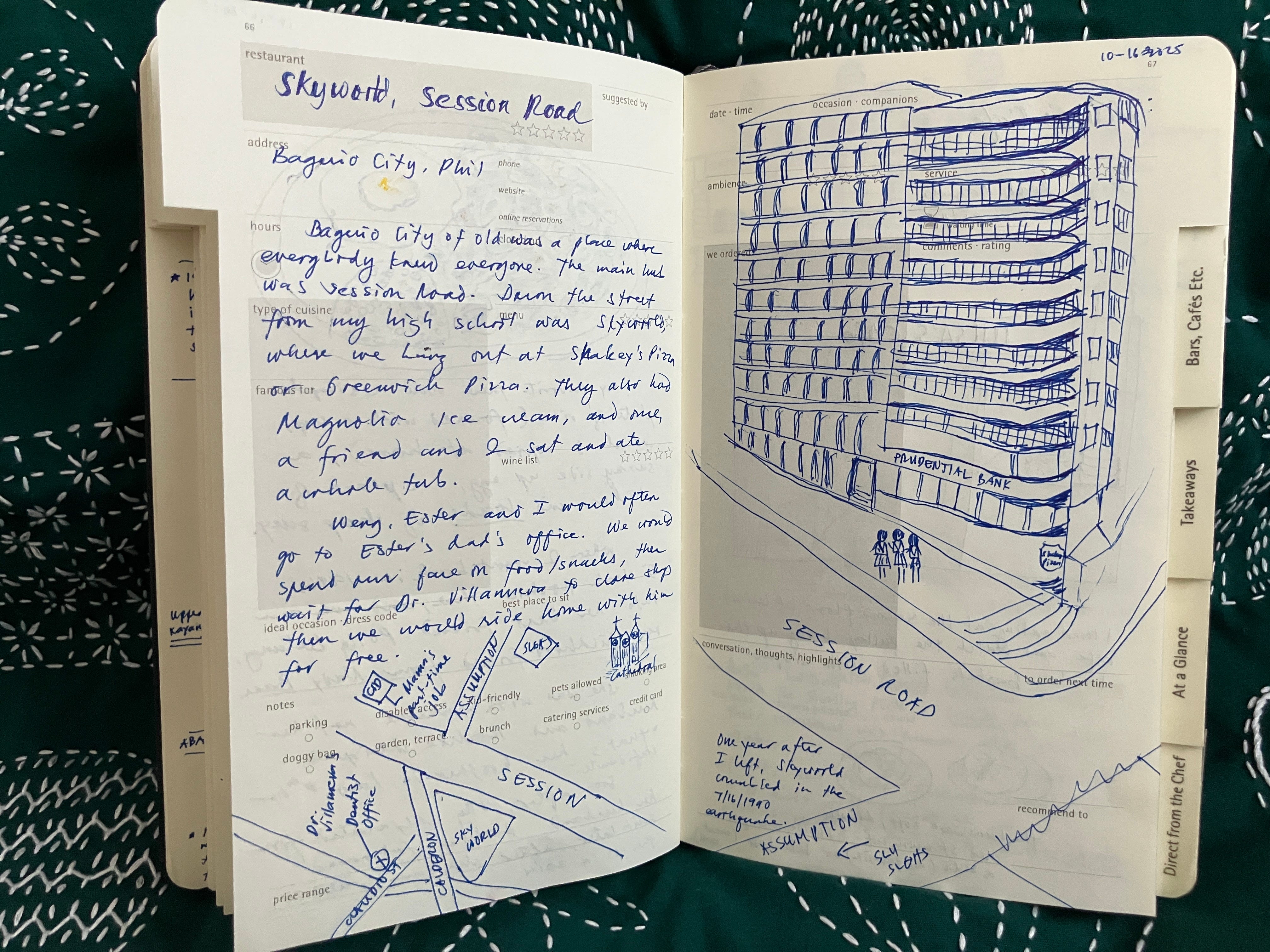
Food is a journey that connects me to people and places in my life, even if they no longer exist. One such place was Skyworld, a tall building on the corner of Session Road and Assumption Road, down the hill from my high school in Baguio City. It was the local hangout in my teens, but crumbled in the great Luzon earthquake in 1990, a year after I had left.
October flew by, and as we approach Thanksgiving, I want to acknowledge the gift of artists and writers who have provided me with the community I needed to let my creativity flourish. Thank you!
Reading Recommendations:
Bite By Bite: Nourishments and Jamborees
Words in the Scrabble board picture above:
Halo-halo - means mix-mix, a blend of sweets served in shaved ice. A classic Filipino dessert
Ulam - Tagalog word for main dish
Kain - to eat. We don’t say hello when we see people. Instead, we say “Kain na!” “(Let’s eat.”)
Mangan - Ilocano version of kain. “Mangan tayon” in Ilocano and “Mangan takon” in Igorot.
Kanin - Tagalog for rice
Inapoy - Ilocano for white steamed rice. Bagas is uncooked rice, and nakset is burnt rice.
Wow you did all that in October?!? What an amazing journey of art, food, and memory!
I think my favorites were garlicky adobo (my mom cooked it on the stove top, then baked it until the sauce turned into a glaze), and gingery arroz caldo.